Erik Baumann · 2 September 2026
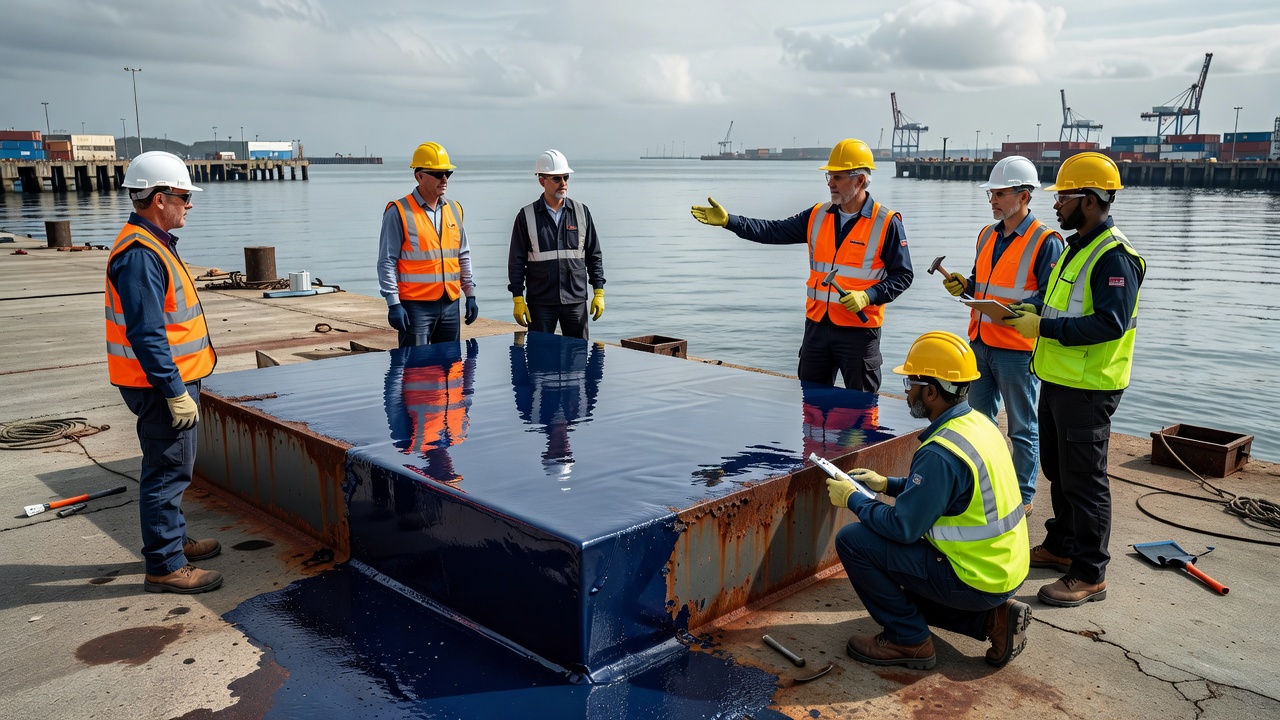
The research team at Bolddock University has developed a groundbreaking corrosion-resistant coating for dock structures. This new material is expected to revolutionize the maintenance of marine facilities by providing superior protection against the corrosive effects of seawater and atmospheric conditions. The project was initiated five years ago in response to increasing reports of structural failures in coastal areas worldwide.
Development Process and Scientific Approach
Scientists utilized a combination of polymer chemistry and nanotechnology to create the coating. The base material consists of a high-performance polyurethane matrix embedded with graphene oxide particles. These particles enhance barrier properties and provide electrical conductivity for cathodic protection. Testing involved immersion in artificial seawater for extended periods, with periodic measurements of corrosion current density. The results demonstrated a significant decrease in corrosion rates, achieving protection efficiencies exceeding 98 percent. Multiple iterations were performed to optimize thickness and curing conditions for practical application in field settings.
Additional experiments focused on adhesion strength and resistance to mechanical damage such as abrasion from floating debris. The coating showed excellent performance, maintaining bond integrity even after simulated storm conditions. Environmental impact assessments confirmed low toxicity levels, making it suitable for use in sensitive marine ecosystems. Computational models predicted decades of reliable service under variable salinity and temperature fluctuations.
Applications, Benefits, and Ongoing Research
The potential applications of this coating extend beyond traditional docks to include oil rigs, wind turbine foundations, and harbor walls. By reducing the need for frequent repainting and repairs, it offers cost savings estimated at millions of dollars annually for large ports. Moreover, the extended service life contributes to sustainability goals by decreasing material consumption and waste generation. Pilot installations are scheduled at regional harbors to validate performance metrics over the next decade.
Future work will involve pilot projects at selected sites to gather real-time performance data. The team is also investigating variations of the formula for use in freshwater environments and extreme temperature conditions. This development underscores the importance of university-led research in addressing industrial challenges related to infrastructure durability and environmental protection.